Knowledge check with explanations

Hoarding Scene Cleanup quiz and study guide

Find out what you already understand, then read the parts you missed.

This 15-question quiz checks how well you understand what a safe, caring hoarding cleanup involves. It is written for family members, caregivers, property managers, and social workers, not for clinicians or crews. The questions cover spotting hazards hidden under piles. They cover who can give consent and when an agency should be involved. They cover keeping dust and germs from spreading during the work and knowing when cleaning is enough and when germ-killing is needed. They also cover where different materials go and keeping records that hold up with landlords, courts, and insurers. If you are about to approach a relative or hire a provider, the study guide will help you ask better questions.

Get an email reply about hoarding scene cleanup

Send a short message to the follow-up inbox. A coordinator can reply by email. This form does not send emergency help; call 911 first if anyone is in danger.

Tell us what you need help with. Share a short description; please leave out medical details, access codes, and other sensitive information.

A request does not confirm a booking. For immediate danger, contact local emergency services.

Or email info@hoardingcleanup.online

Answer from what you know now, not from what you think the right answer should be. A missed question is a pointer to a concept worth reading before a conversation that could affect someone's home. Each explanation links to the relevant guide. The quiz does not diagnose anyone, does not replace advice from a therapist experienced with hoarding, and does not tell you whether a specific house is safe to enter. Think of the score as a readiness check for the role you are about to play: a supportive family member, a fair landlord, or an informed advocate. Revisit it after your first conversation with the occupant.

Hoarding Scene Cleanup knowledge check

15 questions about real hoarding scene cleanup situations: staying safe, what happens, cost, choosing help and the rules. Every answer comes with a short explanation.

Why this quiz matters

Knowing these basics makes it easier to spot bad advice and ask a company the right questions. This quiz is educational — it does not certify anyone. After the quiz, review the explanations for questions you missed. For professional guidance on your specific situation, use the contact form at the top of the page for an email reply.

Progress1 / 15
SafetyQ1

You are standing in the doorway of a relative's crowded home for the first time. Which dangers should you look for first?

Study guide: the six ideas behind the questions

Read these before or after the quiz. They cover the concepts every question draws on, written for hoarding scene cleanup specifically.

1Recognizing the hazards beneath the belongings

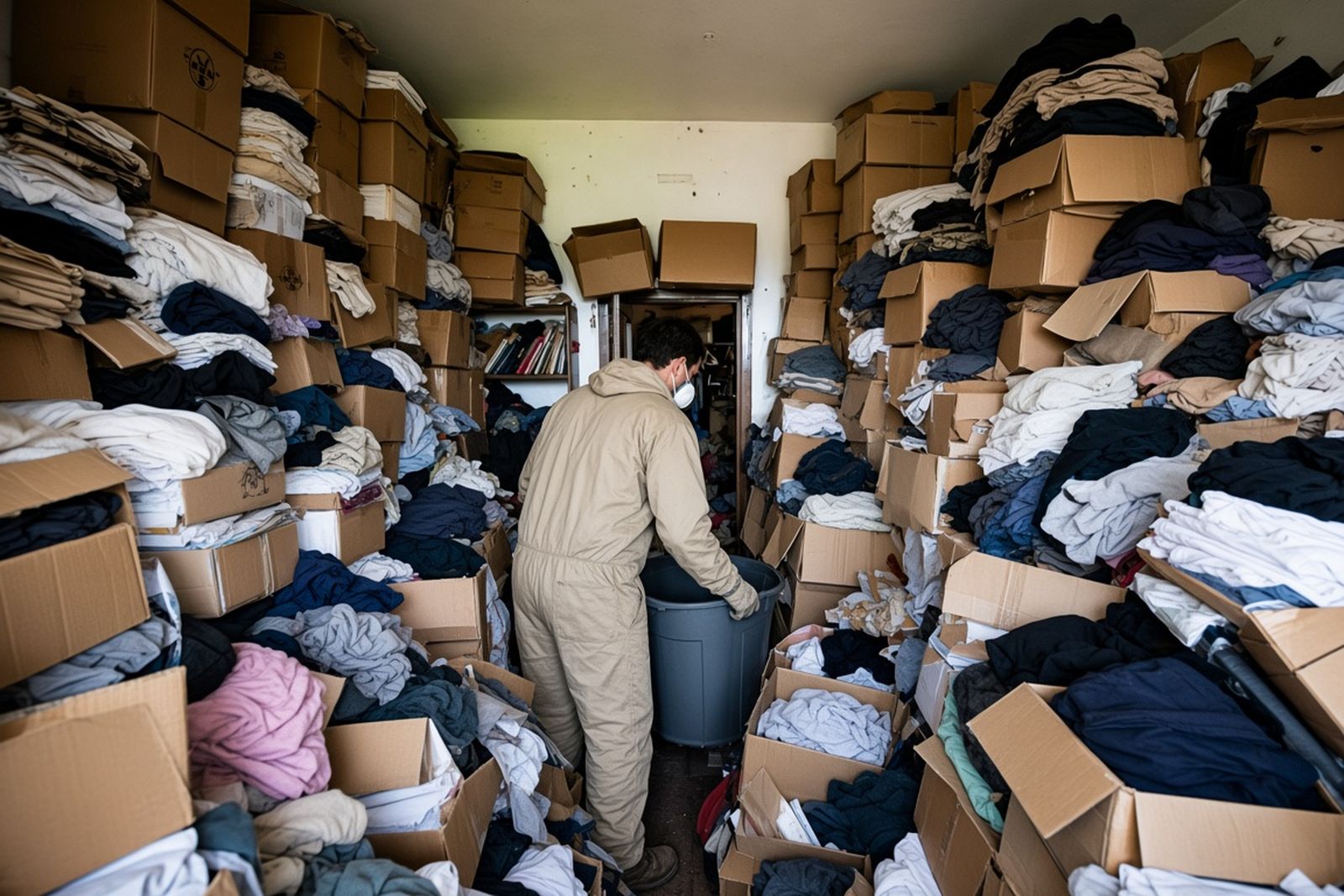
The visible accumulation is rarely the most dangerous part of a hoarded home. Beneath it, animal or human waste may have soaked into flooring, food may have spoiled, pests may have nested, and moisture from a leak or blocked ventilation may have grown mold. Needles from medical use or drug use can be mixed into piles. Stacked items can topple, and floors may sag under the weight. Paths may be so narrow that a fall means being trapped. Signs to note during a careful look from the doorway include strong ammonia or decay odors, droppings, visible moisture stains, missing or blocked exits, and heat sources surrounded by combustibles. Recognizing these tells you which specialists to involve and why volunteers should not start moving things.

2Authority, consent, and when agencies belong

The person who lives in the home holds the right to decide what happens to their things, if they are able to make decisions. Helpers can encourage, organize, and support. But they cannot override that right without legal authority. That could be a guardianship, a power of attorney for property, or a court order. Landlords control the unit but must follow their state's process before touching a tenant's things. Adult protective services, code enforcement, fire officials, and animal services each have their own roles and their own reasons to step in. Learn who can consent and write it down before work starts. That protects the person from a cleanout they never agreed to. It also protects helpers from blame later. Rules vary by state and county, so check locally.

3Containment during the work

Moving piled-up things stirs up dust, mold spores, dried waste, and allergens that had settled. Containment here means keeping that dust from spreading through the home or into hallways and nearby units. Crews use air filters and plastic walls that keep dust inside the work area. They dampen droppings before moving them so bits do not float into the air. They use sealed bags, not open piles, and protected paths for carrying things out. They also keep sorting stations tidy so clean items do not get dirty from soiled ones. For a family member, the lesson is simple. Dry sweeping, shaking out fabrics, or running a home vacuum over animal waste spreads the hazard. Ask any provider how they will manage air quality and carrying things out before the first bag is filled.

4Cleaning versus disinfection in a hoarded home

Once belongings are removed, the surfaces underneath usually need more than a wipe. The right treatment depends on what was there. Cleaning removes dust, grime, and residue. It always comes first, because disinfectants do not work well on dirty surfaces. Disinfecting uses a product approved for that use. It must stay wet on the surface for as long as the label says in order to kill germs. It is needed where animal or human waste, spoiled food, or needles were present. Neither step fixes materials that are soaked through. Carpet, padding, and floorboards soaked with urine usually have to come out. Moldy drywall is usually removed, not sprayed. Odor is fixed by removing its sources, not by covering it with scent.

5Where the different materials go

A hoarding cleanup makes several kinds of waste that should never be mixed. Normal household trash follows city trash rules and can go in a dumpster. Recycling and donations are set apart when the person agrees. Needles and other sharp items go into hard containers they cannot poke through. They follow the sharps rules for your area. Items soaked with blood or other body fluids that can carry disease may count as medical waste. That depends on state and county rules. Household chemicals, old paint, propane tanks, and medicines each have their own disposal paths. Crews should check every load for needles and pressurized cans before it is crushed, so no one later is hurt. Ask the provider to explain each kind of waste. Ask for receipts or waste shipping records where regulated waste is involved.

6Documentation and verifying the result

Good records protect everyone. Before work begins, the plan should name who has the right to consent. It should list what kinds of items the person will review in person and what stages are planned. During the project, build the file with before and after photos of each room. Add a log of any biohazards found and how they were handled, plus disposal records. At the end, checking the result means making sure exits are clear and needles and waste are gone. It means wet or moldy materials were removed or booked with a contractor, and the repairs still needed are listed. If a landlord, court, or agency required certain conditions, confirm each one in writing. This check does not mean the home looks finished. It means the hazards handled in this stage are fixed and recorded.
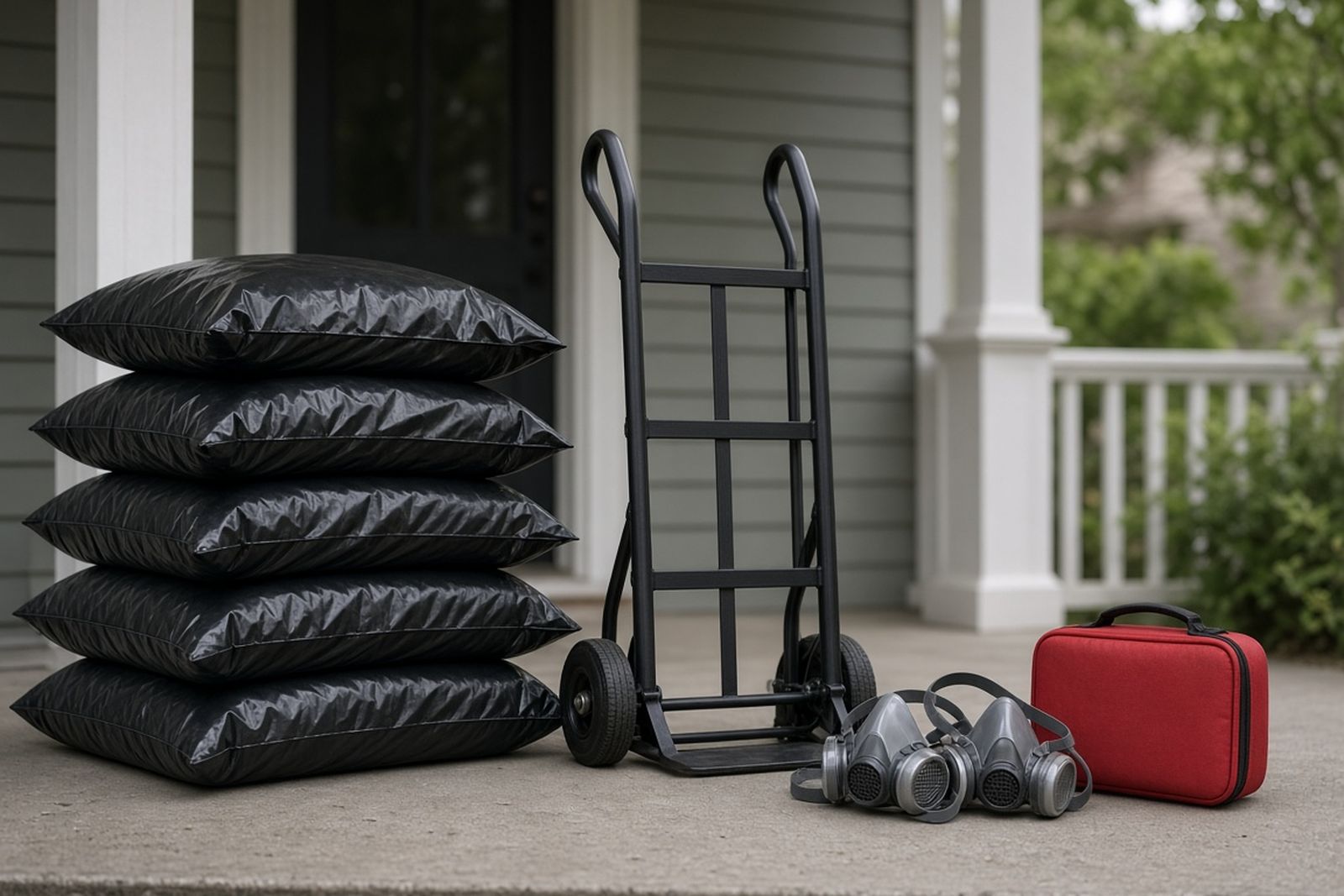
Contractor bags, a hand truck, respirators and a first-aid kit staged on a porch
Illustrative photo, not a job record. Contractor bags, a hand truck, respirators and a first-aid kit staged on a porch.

Hoarding Scene Cleanup facts the quiz draws on

24% of preventable fire deaths

Over ten years, 48 hoarding fires in Melbourne were only 0.25% of residential fires but 10 were fatal, accounting for 24% of all preventable residential fire deaths.

Read with care: Australian data; hoarding fires were likely under-identified in records.

Source: Worcester Polytechnic Institute / Metropolitan Fire Brigade (Lucini, Monk & Szlatenyi) (2009)Melbourne Metropolitan Fire District, Australia, roughly 1999–2009

5-fold

Hoarding participants had a five-fold higher rate of mental health service use than comparison women and were nearly three times as likely to be overweight or obese as family members.

Read with care: Cross-sectional associations, not causation.

Source: Psychiatry Research (Tolin et al.) (2008)Comparison with National Comorbidity Survey participants

34,696

Federal OSHA conducted 34,696 inspections in fiscal year 2024 and has roughly one compliance officer for every 70,000 workers.

Read with care: Excludes inspections by state-plan agencies.

Source: OSHA (2024)United States, federal OSHA, FY2024

10 square feet

EPA says moldy areas smaller than about 10 square feet can usually be handled by the homeowner, while larger areas warrant professional guidance.

Read with care: Applies to mold; contaminated sewage or biohazard materials are treated differently.

Source: US EPA (2026)Residential guidance, United States

These figures are public research and agency data, not this network's own job records. Keep each number with its population, year and limits; none of them predicts cost, timing or outcome at a specific property.

Questions about the hoarding scene cleanup quiz

Does the quiz diagnose hoarding disorder?

No. Hoarding disorder is a known mental health condition that only a qualified clinician can diagnose. The quiz deals with the practical and safety sides of a home that has become dangerous, not with the person's health. If you are worried about a relative, a therapist who works with hoarding can help you understand the condition and how to support treatment.

Why does the quiz emphasize consent so heavily?

Because removing belongings without agreement can cause real emotional harm. It can damage the relationship that makes future progress possible. In some cases it can also expose helpers to legal claims. Consent is also the difference between a cleanup that lasts and one followed by the home filling up again fast. Knowing who can consent is the foundation for everything else.

Is this useful for landlords and property managers?

Yes. Landlords have duties to other tenants to keep the building livable and safe from fire. They are also bound by rules about a tenant's belongings. The quiz covers spotting hazards, agency roles, keeping dust contained in shared buildings, and records. All of these help you handle a hoarding case lawfully and kindly while protecting the rest of the building.

Will the quiz tell me if my relative's home is safe to enter?

It cannot. Only an in-person check by someone who knows these homes can judge the floors, exits, air quality, and hidden hazards. The quiz helps you spot warning signs from a distance. Then you know when to stop and call a professional instead of pushing forward into a space no one has checked.

Can I take the quiz with the person who lives in the home?

If they are open to it, taking it together can start a conversation about safety without accusation. Frame it as learning what a respectful process looks like rather than as proof that something is wrong. Stop if it causes distress; the relationship matters far more than any score on a website.

What if my answers conflict with what a provider told me?

Ask the provider to explain their approach and where it comes from. Practices differ, and some companies still run fast cleanouts that clinicians and experienced providers advise against. If a provider dismisses consent, pace, or containment, that is worth weighing heavily when deciding whom to hire for your relative's home.

How often is the quiz updated?

Questions are reviewed from time to time as advice from mental health groups, fire agencies, and waste agencies changes. Answers link to the current guides on this site. If you think a question is out of date or unkind, use the contact page to tell us. We value feedback from people who hoard and their families most of all, and it shapes our changes.

What other visitors think

Poll results

Every count is a real visitor vote; nothing is seeded or padded. One vote per poll per device, and you can change your answer.

Your experience

If a relative's home had become unsafe, what would be your first step?

No visitor votes yet
Process

How much control should the occupant keep over what leaves the home?

No visitor votes yet